

Most cookware sold in the United States arrives from a machine line that produces thousands of identical pieces a day. Appalachian Cast Iron is doing the opposite, and doing it on purpose.
The company is a family operation producing hand-made and hand-finished cookware, and it chose about the hardest possible way to start: a waffle iron. A waffle iron is a piece of cookware with moving hinges and mating surfaces, which means the foundry work has to be accurate to within a few thousandths of an inch or the thing does not close, cook, or release properly. Beginning there tells you most of what you need to know about the shop’s temperament.
The skillet that shows the work
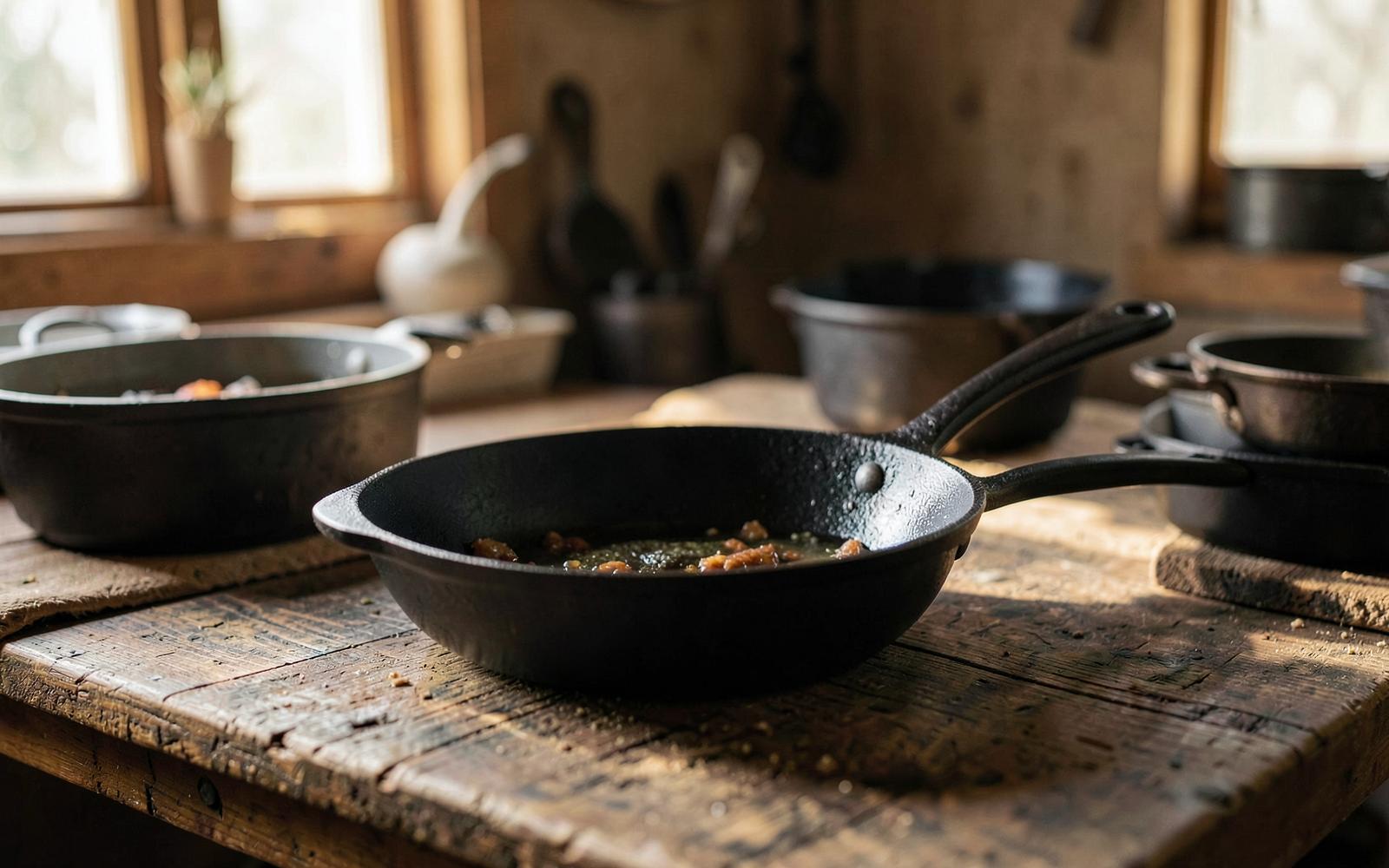
The clearest expression of the approach is the 10-inch handmade carbon steel skillet ($169), made in the company’s Johnson City, Tennessee workshop. Alongside the company logo, every pan carries the individual maker’s mark — a signature authenticating that a specific person finished that specific piece. Buyers can also personalize a skillet with two lines of lettering, up to 20 characters on the first line and 18 on the second.
There is an 8-inch version for people who want a smaller everyday pan, but the 10-inch is the size most home cooks reach for: large enough for a steak with room around it, small enough to control on a home burner.
Why carbon steel, not cast iron
Despite the company name, carbon steel deserves its own explanation. It is chemically close to cast iron — both are iron with carbon — but carbon steel contains less carbon, which lets it be formed thinner and lighter. In practice that means:
- It heats up faster and responds to burner changes more quickly than a comparable cast iron pan.
- It is meaningfully lighter, which matters if you cook one-handed or move the pan between stovetop and oven.
- It seasons the same way cast iron does, building a slick, dark patina with use.
- It handles high heat without complaint, so it is the pan for searing, not the pan for simmering tomatoes for an hour.
How to season and keep one
A handmade carbon steel pan is not fussy, but it does ask for a routine. Wash and dry it thoroughly, then heat it with a very thin film of a high-smoke-point oil until the oil just stops smoking, and repeat two or three times. After cooking, rinse hot, dry completely on the burner, and wipe with a trace of oil. Avoid long acidic simmers early in the pan’s life, and avoid the dishwasher forever.
Done consistently, the pan gets better with age instead of worse — which is the entire argument for buying one piece of cookware that outlives you rather than three that do not.
Who it’s for
This is a buy for the cook who already knows they want a lifetime pan and would rather pay a maker than a factory. It is also a genuinely good gift, because the personalization turns a tool into something closer to an heirloom. If you are shopping for a first, cheap, do-everything pan, this is not that. If you are shopping for the last skillet you buy, it is a serious candidate.
Editor’s note: this article is part of our brand discovery coverage. We highlight independent brands we think are worth knowing about. Prices and availability were accurate at the time of writing.