
Five years ago grip socks were a piece of studio equipment you forgot and had to buy at reception for $18. Now they are a wardrobe category with prints, slogans, and a resale market. The shift tracked exactly with the reformer Pilates boom, and a handful of brands built businesses in the gap.
Souls. is one of them — an LA label that describes itself as more than a grip sock brand, aimed at the intersection of workout function and aesthetics. Its crew sock collection runs roughly $15–$20 a pair, with the slogan-forward designs the category now runs on.
Why studios require them
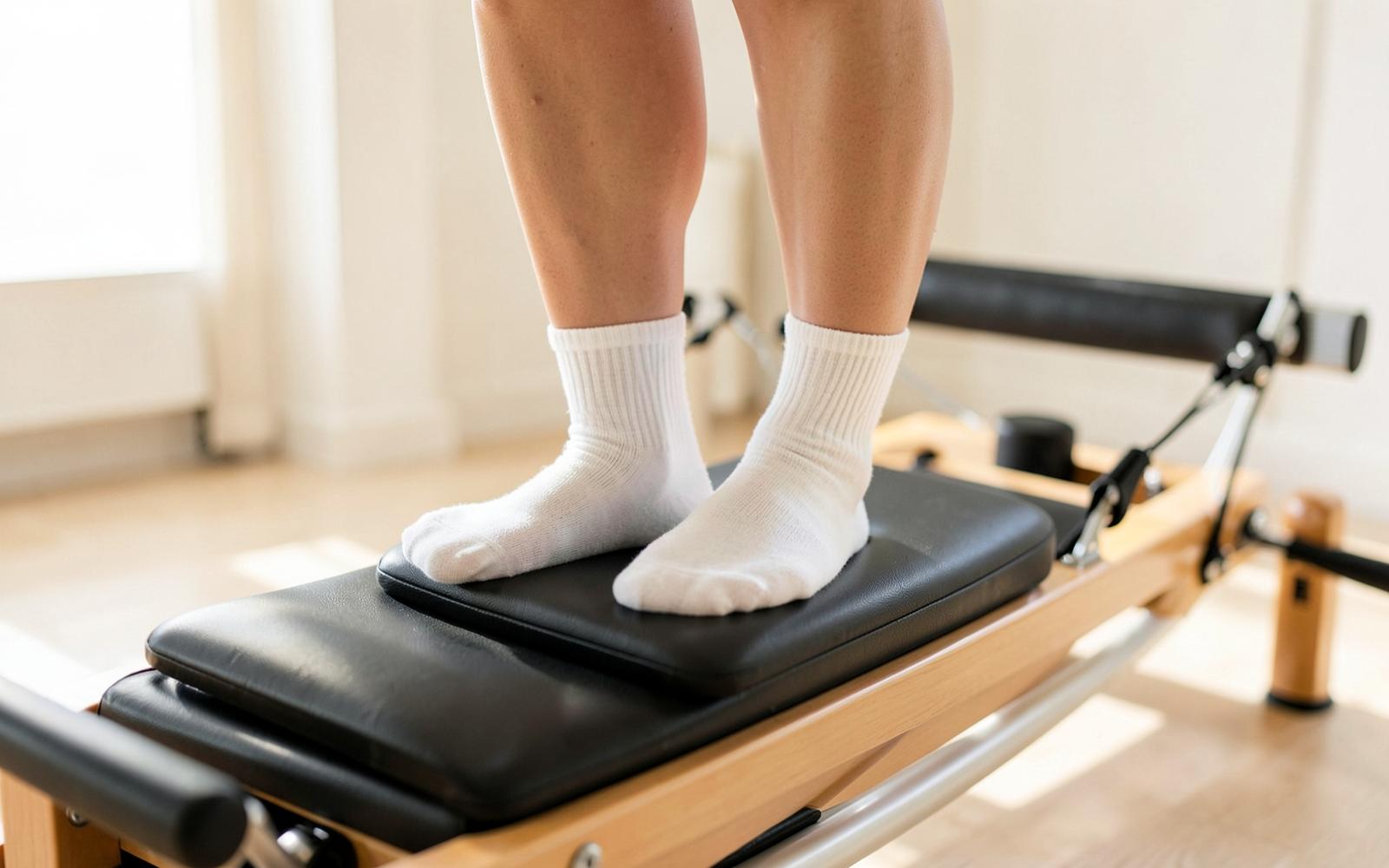
It is not a merchandising scheme, or at least not only one. On a reformer carriage or a polished studio floor, bare feet slip when they are damp, and slipping during a footwork sequence at load is how people injure knees and ankles. Grip socks also solve the hygiene problem of shared equipment, which is why the requirement spread from Pilates to barre, yoga, and trampoline studios.
What makes a good pair
- Grip coverage. Full-sole silicone dots or bars beat a small heel-and-ball patch, especially for standing work.
- Arch compression. A band across the midfoot keeps the sock from rotating, which is the single most annoying failure mode.
- Cotton-rich blend with spandex. Enough natural fiber to breathe, enough stretch to stay put.
- Crew height. Ankle socks slide down under load; crew height stays where you put it and reads better with leggings.
Crew versus ankle, and why crew won
The visual argument is straightforward — crew socks break up a legging line and have become part of the studio uniform rather than an accessory hidden inside a shoe. The functional argument is that a taller cuff resists rolling during footwork and mat transitions. Both point the same direction, which is why nearly every grip sock brand has moved its bestsellers to crew.
Care, briefly
Silicone grip is the part that dies first, and heat kills it. Wash cold, turn inside out, and air dry. A pair treated that way lasts a year or more of twice-weekly classes; a pair run through a hot dryer loses grip in a couple of months and quietly becomes an ordinary sock.
Two or three pairs in rotation is the practical number for anyone taking classes more than once a week — enough that a laundry cycle never sends you to reception to buy an emergency pair.
Editor’s note: this article is part of our brand discovery coverage. We highlight independent brands we think are worth knowing about. Prices and availability were accurate at the time of writing.