
The short answer: if you want an organic pre-workout with less caffeine, look for four things on the label: a stated caffeine amount per serving well below the 150 mg or more found in many standard formulas, a USDA Organic seal you can verify, a full ingredient list instead of a vague blend, and no sweeteners you are trying to avoid. Organic Muscle’s Pre-Workout in Lemon Berry is one example that checks those boxes on paper: the brand lists 70 mg of organic caffeine per serving and labels it USDA Organic, vegan and non-GMO.
Lower caffeine is a reasonable goal for plenty of people: evening lifters who do not want to lie awake, coffee drinkers who already have two cups before the gym, and anyone who simply dislikes the jittery feel of a big stimulant dose. Here is how to compare options without relying on marketing language.
Five features to check on a lower-caffeine pre-workout
1. Caffeine stated in milligrams, per serving
The most useful number on the tub is caffeine per serving, written in milligrams. If a product only says “energy blend” or hides caffeine inside a proprietary blend, you cannot plan around it. Also check whether the brand uses multiple caffeine sources, such as green tea or yerba mate, and whether the stated total includes them. The FDA notes that 400 mg a day is an amount not generally associated with negative effects for most adults, and that sensitivity varies widely (FDA consumer update). Count your coffee, tea and pre-workout together.
2. An organic seal you can verify
“Made with organic ingredients” and “USDA Organic” are different claims. Products labeled organic must contain at least 95% organic ingredients, excluding water and salt, and be certified by a USDA-accredited agent. You can search a brand or certifier in the USDA Organic Integrity Database before you buy.
3. A readable ingredient list
Lower-stimulant formulas often lean on food-based ingredients such as beet, pomegranate or berry powders. That is fine, but the label should tell you what is in the scoop. Ingredient research on a single compound does not prove what a finished blend will do for you, so treat performance claims as the brand’s description rather than a promise.
4. Sweeteners and additives
If you avoid sucralose or artificial colors, check the label rather than the front of the tub. Flavor systems vary even within one brand’s range.
5. A flexible way to adjust the dose
A lower-caffeine product lets you use a full serving without stacking stimulants. A higher-caffeine sibling in the same line can be useful too, if you want a stronger option for early sessions and a gentler one for late workouts.
Where Organic Muscle’s Lemon Berry fits
On its product page, Organic Muscle describes the reformulated Lemon Berry as a USDA Organic formula with 70 mg of organic caffeine (PurCaf®) per serving and more than 30 fruits, roots, adaptogens and herbs. Named ingredients include green tea, yerba mate, maca, organic beets, pomegranate, PEAKO2®, cordyceps, coconut water, ashwagandha, rhodiola, turmeric, cranberry and blueberry. The page states the product is vegan, non-GMO, made with no gluten-containing ingredients in a facility that may also process wheat, and made with no sucralose and no preservatives.
For comparison, the brand points buyers who want more stimulant to its Passionfruit Guava pre-workout, which it describes as the classic 150 mg formula. Having both in one line makes it easy to keep the same base and change only the caffeine.
Practical details from the page, read on November 15, 2026:
- Price: $59.99 for one bottle, $149.99 for three and $259.99 for six. Subscribe and save is listed at 20% off, with delivery every 4, 6 or 8 weeks and the option to skip or cancel online.
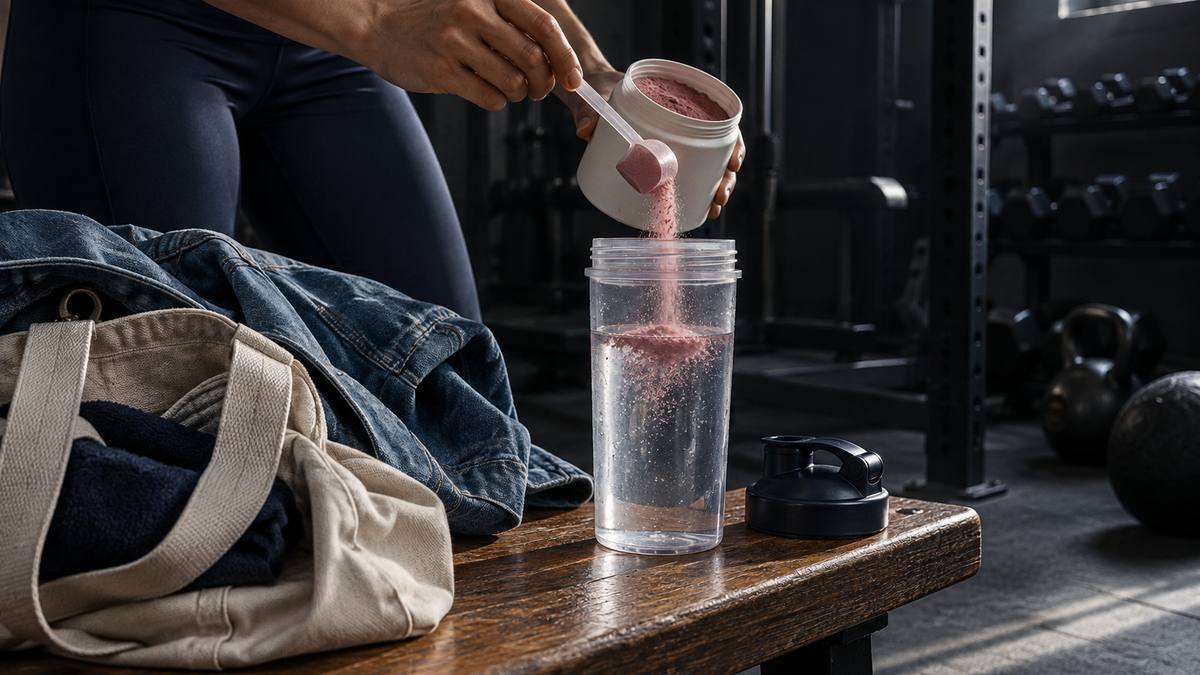
- Timing: the brand suggests mixing it with cold water 20 to 40 minutes before training.
- Testing and origin: the brand says every product is lab tested for purity before release, its organic certification is verified each year by an accredited certifier, and products are made at a facility in California.
- Shipping and returns: free US shipping in 2 to 5 business days per the shipping policy, and a 30-day money-back policy on the unused portion, with return shipping paid by the customer (refund policy).
If you are building a broader routine, the brand’s About page explains its organic and vegan positioning across the range.
Limitations
- The page does not list servings per bottle or scoop size in text, so check the Supplement Facts panel on the tub before comparing cost per serving.
- Adaptogens such as ashwagandha and rhodiola are not right for everyone. If you are pregnant, nursing, take medication or have a medical condition, ask your clinician first; the brand gives the same advice for pregnancy.
- “Smooth energy” and “no crash” are the brand’s descriptions. How caffeine feels depends on the person, sleep and total daily intake.
Next step
Add up the caffeine you already get on a training day. If a 150 mg or higher pre-workout pushes you toward your limit, try a 70 mg organic option like Lemon Berry for two weeks, keeping your coffee steady, and note how your sessions and sleep compare.
FAQ
Is 70 mg of caffeine a lot for a pre-workout?
No. It is on the low end. For context, the FDA describes 400 mg a day, about two to three 12-fluid-ounce cups of coffee, as an amount not generally associated with negative effects for most adults, so 70 mg is a modest share of that.
Can I take a lower-caffeine pre-workout in the evening?
Many people do, but caffeine can affect sleep hours later. If you train late, try it on a low-stakes night first.
Some of the brands mentioned in this article may have a prior working engagement with this publication.