
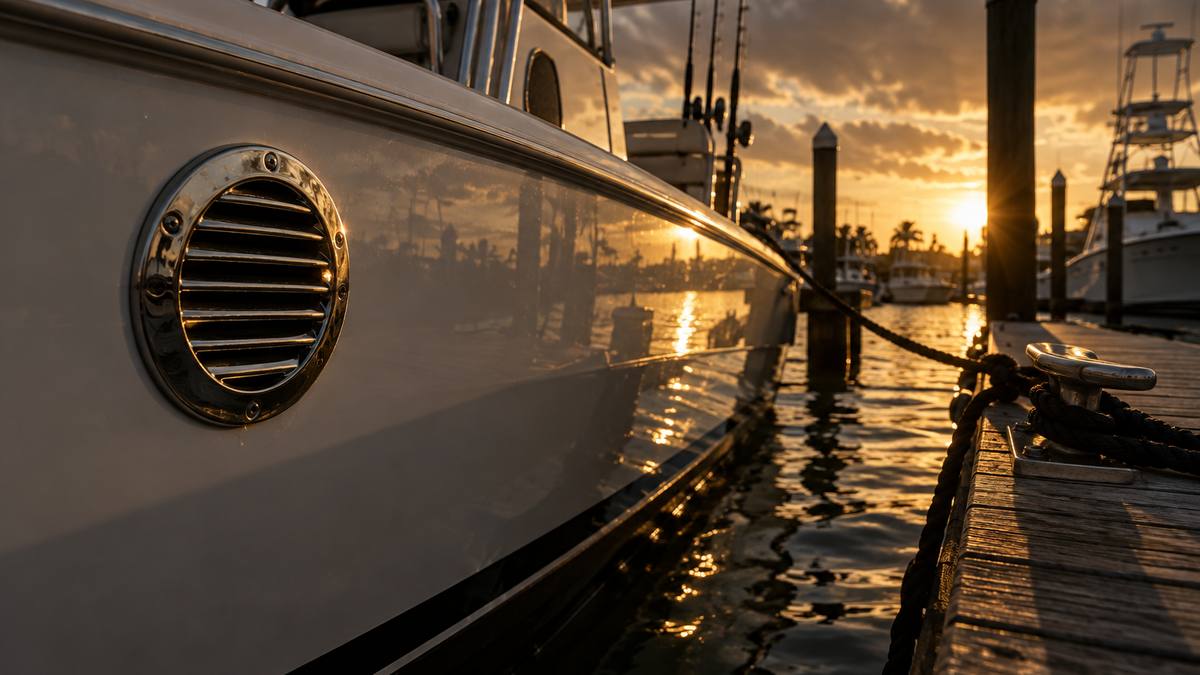
The best place to look for a replacement boat vent grill is a supplier that publishes the numbers you actually need to match: hose size, cutout or hole size, flange diameter, screw spacing and material. A general boating store can be a good starting point, but if your old grill is cracked, sun-faded or from a builder you can no longer reach, a dedicated replacement catalog with full measurements usually gets you to the right part faster. Replacement Boat Parts’ vent grill collection is one of those catalogs, and it is a useful place to compare options once you have measured what is on your boat.
Start with what is on the boat, not with the catalog
Before you open any website, take the old grill off if you can and write down five things:
- Hose size. Most blower and engine compartment vents are built around a 3 inch or 4 inch hose. The tailpiece or barb on the back of the grill has to match it.
- Hole or cutout size. Measure the opening in the hull or deck, not the grill face. A grill that looks right can still fall through, or refuse to seat in, a hole that is a quarter inch off.
- Overall or flange diameter. This decides whether the new grill covers the old screw holes and any staining around the opening.
- Fastener count and spacing. Some grills use two screws, others four or six. If the spacing differs, you will be drilling new holes in gelcoat.
- Material and finish. Plastic, stamped stainless or cast stainless, and the color that matches the rest of your hardware.
Take a straight-on photo with a tape measure across the face and another of the back. Those two photos settle most matching questions.
Decision criteria that actually separate one grill from another
Once you have measurements, these are the differences worth comparing:
- How the hose attaches. A smooth barb with room for double hose clamps is a simple, well-understood setup. Some grills use an integrated clamp-free hose attachment instead.
- Published vent area. If the listing states an airflow or vent area figure, compare it with the part you are replacing, especially on an engine compartment.
- Salt exposure. 316 stainless is the higher-grade option for saltwater; stamped 304 stainless and UV-resistant plastic are common, lighter-duty choices.
- Screen or no screen. A fine screen helps keep insects and debris out of lockers and cabins.
Examples from the Replacement Boat Parts catalog
Listings on Replacement Boat Parts tend to spell out the specifications, which is what makes the site useful for matching. A few examples, with prices as listed on November 16, 2026:
| Grill | Hose / hole | Key published specs | Price |
|---|---|---|---|
| Vent Grill fits 3″ hose, white max flow (ME 8210) | 3″ hose, 3″ hole | 1.25″ smooth barb, 3.8″ flange, two screws (not included), room for double clamps | $4.99 |
| Vent Grill fits 4″ hose, white max flow (ME 8200) | 4″ hose, 4″ hole | 1.5″ smooth barb, 4-7/8″ overall flange, two screws (not included) | $4.99 |
| White domed vent grill for 4″ hose | 4″ hose, 4.25″ cutout | 4.5″ overall diameter, 1.25″ tailpiece, 7.33 sq in vent area, clamp-free hose attachment, UV-resistant plastic | $12.99 |
| 3″ Cast Stainless Steel Vent Grill | Check against your opening | Cast 316 stainless, 3-13/16″ overall width, 2-13/16″ screw centers, four #7 fasteners (not included) | $24.99 |
If you want an exact like-for-like swap of a basic white blower vent, the max flow grills are the simplest match because the listings give the barb, hole and flange sizes. If the old opening was cut slightly larger, the domed 4 inch grill specifies a 4.25 inch cutout, so measure before assuming it will drop in. If the boat lives in saltwater and you are replacing a visible, high-touch grill, the cast 316 stainless option is the heavier-duty choice, and its screw-center figure lets you check it against existing holes before ordering.
Limitations to keep in mind
A matching diameter does not prove a matching part. Check the depth of the tailpiece against the space behind the panel, and confirm fastener sizes, because several grills list screws as not included. Vents on an engine compartment are part of a ventilation system; if you are changing hose size, adding vents or working near fuel components, have a qualified marine technician review the job. Some catalog items also show as unavailable, so confirm stock on the listing you plan to buy.
On returns, Replacement Boat Parts’ refund policy describes a 30-day window that requires return authorization first and asks that items be unused and in original packaging. Read the current policy for shipping cost terms before you order a part you are unsure about.
Next step
Measure the hose, the hole and the screw spacing, photograph the front and back of the old grill, then compare those numbers against the listings in the vent grill collection. If nothing lines up, the team lists a phone line and contact form on its contact page, and sending your measurements and photos there is a sensible way to ask for help matching the part.
FAQ
Can I replace a 4 inch vent grill with a 3 inch one?
Not directly. The grill’s barb or tailpiece is sized to the hose, so a 3 inch grill will not seat a 4 inch hose, and the hole in the hull would also need to change. Match the hose size first.
Is stainless always better than plastic for a boat vent?
Not always. Stainless, especially 316, suits saltwater and visible hardware, while UV-resistant plastic grills are lighter, less expensive and easy to color-match. Choose by environment, fit and the look of the rest of your hardware.
Some of the brands mentioned in this article may have a prior working engagement with this publication.