
The tent you can buy is decided by your roof, not your taste. Here is the order to check the numbers — dynamic load, static load, crossbar spread, closed weight — before any model goes in a cart.
Some brands we cover are clients of our publisher. What we recommend is decided by our editors, and prices are read on the date noted in each article. Our standards.
Quick take: Work from the vehicle outward. Find your roof’s dynamic (driving) load limit in the owner’s manual or from the carmaker, then the rack system’s dynamic limit, then the tent’s closed weight; the lowest number in that chain is your ceiling. Then confirm two details most buyers miss: the front-to-back crossbar spread the tent maker requires, and the crossbar width and height its brackets will clamp onto. Prices and specs read 10 October 2026.
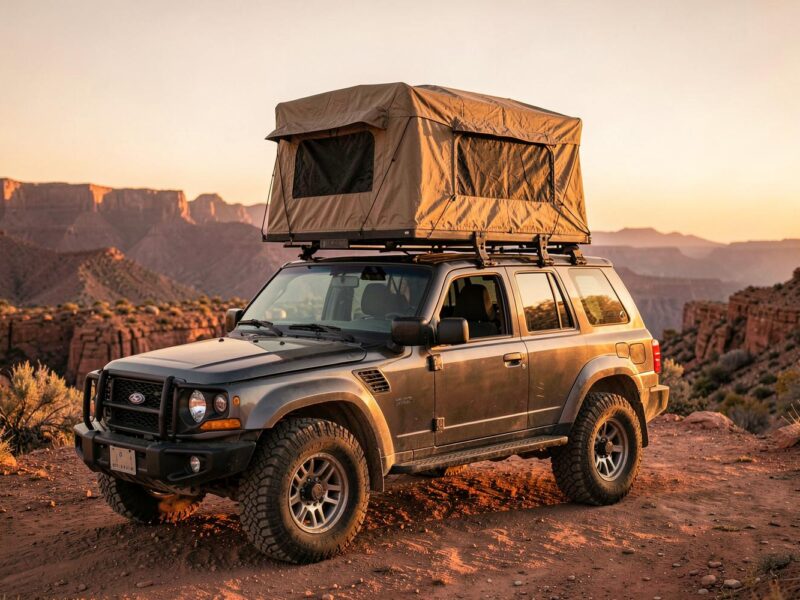
How to choose a rooftop tent for your vehicle is an engineering question, and most shopping starts in the wrong place. The useful starting point is duller: two load numbers, a tape measure and the bars already on your roof. A tent that is fine on a mid-size truck can be unmountable on a crossover with flush rails, and the tent’s marketing will not tell you that. What follows is a sequence, not a ranking: there is no single best rooftop tent, because the constraint is your vehicle. Figures below come from manufacturer pages read on 10 October 2026, with sources linked so you can check them against your own build.
How to choose a rooftop tent for your vehicle, step by step
The chain of limits runs vehicle → rack → tent, and it only works in that direction:
- Roof dynamic load. The maximum weight your vehicle manufacturer permits on the roof while driving. It lives in the owner’s manual, not on a tent page. Thule’s rooftop tent guidelines tell buyers to check the manual or a dealer, and flag glass and panoramic roofs as a case where the carmaker must be asked directly.
- Rack system dynamic load. Towers, bars and fit kits each carry their own rating, and Thule’s guidance is blunt: the lowest-capacity component sets the system’s capacity.
- Tent closed weight. The tent plus its mounting hardware — what the roof carries at highway speed.
- Static load. The parked allowance, which covers the tent plus sleepers and is much larger.
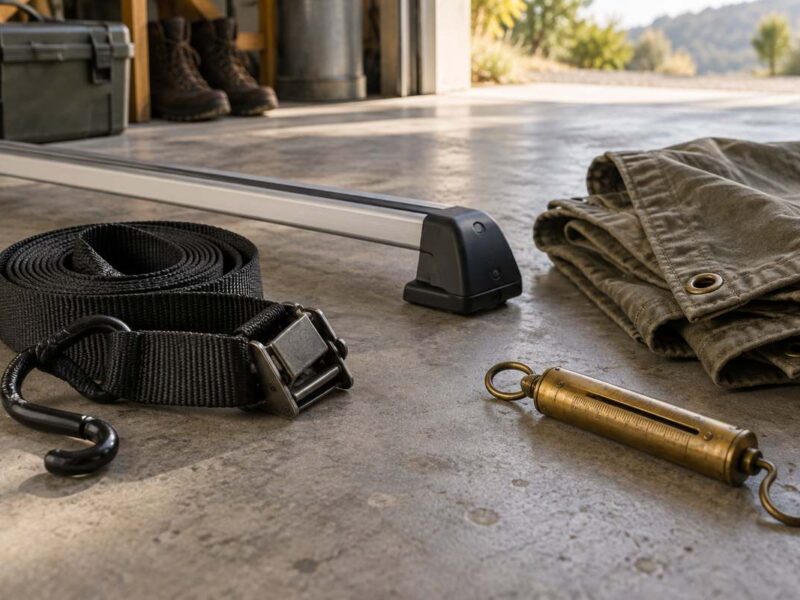
- Geometry. Bar spread, bar shape and bar width decide whether the brackets physically fit.
If you cannot find the step 1 number, call the dealer; no retailer or tent brand can supply it for you.
Static versus dynamic load, and why the gap is so large
Dynamic capacity is what the roof may carry in motion, when bumps and cornering multiply forces. Static capacity applies when parked — tent plus sleepers. Thule’s document says static capacity can exceed dynamic, with a rule of thumb for its own racks of roughly three times the dynamic figure. Yakima’s weight-limits article makes the same split in different numbers: a 165 lb vehicle dynamic limit in its worked example, and a 600 lb maximum static rating for its systems.
Yakima’s arithmetic is worth copying, because most buyers skip it: it subtracts the hardware from the vehicle limit first, so a tower set, a pair of bars and two accessories totalling 40.2 lb leave 124.8 lb of usable load against a 165 lb limit. The rack is part of the payload, and a 140 lb tent does not fit a 165 lb roof once 40 lb of rack is bolted to it.
Tent brands state their side plainly. iKamper’s page for the Skycamp 4.0 Duo says the roof and rack need a dynamic load of at least 140 lb for the Duo, 155 lb for the Trio and 185 lb for the Quad, and tells owners to find their vehicle’s dynamic figure in the manual or from the manufacturer. Tuff Stuff’s listing for the Alpha II hard-shell asks for crossbars that can accept 190+ lb. Neither condition replaces your vehicle’s rating.
Crossbar spread, bar shape and rail type
Spread is the front-to-back distance between your crossbars, and it is a hard requirement. Thule’s guidelines set a minimum front-to-back spread of 28 in / 70 cm and publish a per-model table of minimum side-to-side spreads, from 24 in for the Foothill to 34 in for the Kukenam. iKamper lists a crossbar distance range of 22–41 in for the Skycamp 4.0 Duo and, in its fitment notes, asks for bars at least 30 in apart front to back with a 60 in maximum. Roofnest publishes a 28 in spread for the Condor 2 Air and a 35 in maximum for installing the softshell Meadowlark. Short-roofed vehicles are where this bites: if the bars cannot sit far enough apart, the tent is out regardless of weight.
Bar cross-section matters next. Tuff Stuff’s Alpha II notes say its brackets fit crossbars up to 3.25 in wide. Thule’s document gives maximum bar heights and widths per tent family and names rack systems — certain clamp-foot and aerodynamic-edge bars — it does not approve for tents, because an occupied tent’s static load can damage the rack or vehicle.
Factory rails are not all the same thing
Raised rails, flush rails, naked roofs and fixed-point roofs each take a different fit kit. Thule recommends rooftop tents only on supported raised rails, noting unsupported rails are usually too flexible for an occupied tent’s static load, and advises placing crossbars close to the support structure. The fit guide for your exact year and trim settles this, not a general compatibility claim. Front Runner’s note on Slimline II load ratings makes the point from the rack side: the rack can hold more than the vehicle maker may deem safe to travel with, so the vehicle’s guidance governs.
Closed weight, closed height and the cost of carrying them
Closed weight decides whether the tent fits your roof budget and whether two people can lift it. Closed height shows up daily: garage clearance, parking structures, fuel use.
| Model | Manufacturer-stated weight | Closed height | Stated mounting requirement |
|---|---|---|---|
| Roofnest Meadowlark (softshell) | 90 lb | 12 in | Max bar spread 35 in |
| Overland Vehicle Systems TMBK 3 Person | 108 lb dry | Not stated on the listing | Confirm rack capacity first, per the brand |
| iKamper Skycamp 4.0 Duo | 119 lb (tent plus brackets) | 13¾ in | Dynamic load ≥140 lb; bar spread per brand notes |
| Roofnest Condor 2 Air | 140 lb | 14 in | 28 in crossbar spread |
| Tuff Stuff Alpha II | 141 lb | 14 in | Bars rated 190+ lb, 30 in apart minimum |
The spread between 90 lb and 141 lb separates a tent a crossover might carry from one that assumes a truck or a platform rack. Overland Vehicle Systems’ TMBK page walks through the same static-versus-dynamic distinction before it describes the tent, and tells shoppers to confirm rack capacity first. For weight comparisons alone, this publication’s earlier survey of nine rooftop tents weighed from 90 to 184 pounds covers that model by model.
Where retail listings help, and where they stop
A specialist retailer is useful for two things: current prices side by side, and what is in stock rather than what a brand still lists. Overland Junction, which carries several of the brands above, publishes prices across its rooftop tent range; read 10 October 2026, those were the OVS TMBK 3 Person from $1,149.99, Roofnest Meadowlark from $1,695.00, Roofnest Condor 2 Air Series from $3,795.00, Tuff Stuff Alpha II at $3,245.00 and the iKamper Skycamp 4.0 Duo from $4,250.00. Prices change; re-check before deciding on one.
What a retail listing cannot do is certify that a tent is safe on your roof. Fitment, load ratings and installation requirements come from the vehicle, tent and rack manufacturers, in their own documents, for your exact year, model and roof type. Treat any blanket “fits most vehicles” claim as a prompt to find those documents.
A short pre-order checklist
- Dynamic roof load from the owner’s manual or dealer, in writing if possible.
- Your rack’s dynamic rating, with towers, bars and existing accessories subtracted from the vehicle figure.
- The rack system’s static rating against tent weight plus sleepers.
- Measured front-to-back crossbar spread against the tent’s stated minimum and maximum.
- Bar width and height against the tent’s bracket limits.
- Rail type and whether the tent or rack brand excludes it.
- Closed height added to vehicle height, checked against your garage and usual parking.
- Two or three people for installation, which several brands assume.
One item belongs on the list that no spec sheet carries. NHTSA’s guidance on securing loads notes that about 850 people are killed and nearly 19,000 injured each year in crashes involving objects in the road, and that every state has an unsecured-load law. A rooftop tent is a permanent, high-mounted load: torque the hardware to the manufacturer’s figures and re-check after the first few trips and after rough tracks.
What this adds up to
Choosing well is mostly filtering. The roof rating removes the heaviest tents, crossbar spread removes the ones that cannot physically mount, closed height removes the ones that will not clear your garage, and budget sorts what remains. Only then does soft-shell versus hard-shell become a real decision. If the numbers put you right at a limit, take the lighter tent rather than hope; manufacturers publish these figures because they do not want them treated as suggestions. More on how this publication evaluates gear is in how we choose, and if a figure here no longer matches a manufacturer’s page, the corrections policy explains how to flag it.